Saturday, 27 April 2013

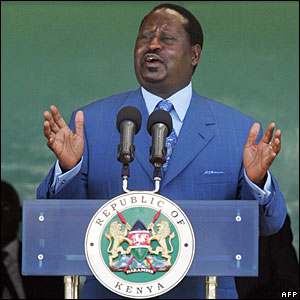
Makueni Senator Mutula Kilonzo is Dead


Shock engulfed the entire country on learning the sudden death of the newly elected Makueni Senator as messages of condolence started trickling in.

Former Deputy Prime Minister Musalia Mudavadi said it was sad that the country had lost a great man in legal profession and a committed leader especially in reforming Kenya.
“It is with deep sorrow that I have learnt of the untimely death of my friend and former cabinet colleague Senator Mutula Kilonzo of Makueni,” Mudavadi said.

“Senator Mutula was a consummate lawyer who was revered at the bar for his forceful legal arguments and mentoring of young legal minds. This is a person to whom convictions and logic were second nature. The country, Senate and the legal profession has lost a consummate policy maker and thinker,” he asserted.

Mutula had built an image of a man who always took strong grounds despite criticisms. He will be remembered for tirelessly convincing Members of Parliament to pass the bill seeking to establish a local tribunal when he served in the Justice Ministry. His name goes down in the history books for his important role in delivering a new Constitution.
 He will also be remembered for his unique stand when he served as Minister for Education where he proposed the 'above the knee skirts' for school girls.

The renowned lawyer was among the key leaders in the Coalition of Reforms and Democracy (CORD) party which was led by former Prime Minister Raila Odinga.

Born in Mbooni Constituency in 1948, the Senior Counsel was the first to serve as a minister in the Nairobi Metropolitan Development ministry.
Prior to his election as a senator, he served as Mbooni MP in the 10th Parliament.

Read similar stories here.....

Shackles of Doom Synopsis

Shackles of doom is play that depicts a film shoot set in the land of the Kanas, who refer to themselves as the TRUE KANAS, their land is oil rich but they are ignorant of the treasure that lies beneath their soil….a delegation arrives to their land and offer a beautiful lady – Wamaitha, to be married off to Lopush who is “Kana” in exchange of land where they settle. Wamaitha is 3 weeks pregnant when they come and Kimani who is purported to be her guardian is responsible, she is married off against her will and her community with great determination and strong will construct “Mafuta Oil Refinery Company”.

During appointing of human resource, job opportunities are given with biasness and nepotism! The people of Kana demand for equal opportunities but are dismissed; only one person is considered from the marginalised community but as a watchman. On the eve of Lopush and Wamaitha’s wedding, Kimani who is the CEO of the refinery company has an order to deliver 600 barrels of oil and dictates that everybody works on the night shift including those who were on duty during daytime. Lopush is not spared either because of his wedding that is coming up at the break of dawn; he is forced to be on duty as a security officer.

 Kimani invades Lopush’s house demanding for intimacy from Wamaitha, of which she declines and they are caught up in the argument by Lopush who has absconded his duty in rebellion. Kimani hides in the children’s bedroom but unfortunately Lopush finds him, Wamaitha insists that the daughter can bare her witness that she did not fornicate. As a matter of bad fortune she finds the daughter dead, still and lifeless when she goes to wake her up. Kimani is accused of her demise. A technical hitch occurs in the Mafuta Oil Refinery Company and there is a fire breakout at about the same time, angry villagers are summoned and just when they want to deal with the accused murderer (Kimani), his wife calls and says they are trapped in an inferno and Lopush has the keys to all the exits.

The whole village rush to help but they find a tragic scene, everyone has been consumed by the inferno, Wamaitha breaks news that her dead daughter was Kimani’s child.

The film director calls for cut and signifies end of their shooting, one member of the cast however retorts that the film has no credible resolution and cannot compete favourably, she suggests that all the communities be equally represented in employment opportunities for good relations, harmony and peaceful coexistence. Cameras were rolling in the meantime and the director terms the resolution to be credible.

(Shackles of Doom staged by Butere Girls is a play written by award winning play-wright Cleophas Malalah, the Kakamega MCA for Mariakalo Ward. The play won Zonal, Divisional, District, Regional levels but banned from being staged at the National Drama Festivals set for Mombasa this month on claims that play is hate speech)


Source: Group Kenya...

Read more......... 

Friday, 26 April 2013

Politically Correct?

Forget the Ngilus and the Balalas and open your eyes:

Former MD of Kenya-Re, Grace Wakhungu happens to be Moody Awori’s sister. Grace’s son, Paul Wakhungu played a pivotal role in the YK’92 campaigns. Grace is married in Bungoma. Grace herself has also been a key stalwart of KANU both pre and post KANU era. Moody was a KANU stalwart and played pivotal roles in the Jubilee campaigns. What a clever and a nice way to payback by fishing Judy Wakhungu who is a daughter to Grace and younger sister to Paul.

Second there is Rachel Omamo, daughter of the late Odongo “Kaliech” Omamo. A lot of symbolism draws in this case. When Jaramogi Odinga fell out with Jomo Kenyatta, Odong Omamo was brought in to checkmate him. With the demise of Jomo, Kaliech checkmated the Odinga’s until his demise. 


Rachel’s father also played critical roles in Uhuru’s 2002 campaigns. With the demise of Kaliech, her daughter rose to become the first Lady chair of Law Society of Kenya (LSK). Former President Kibaki was later to reward her with several Ambassadorial posts, most probably because of close ties with the Kenyattas.

It is also said that during Jomo’s days the Kenyattas used to fly to Trans Nzioa to visit the Wamalwas, and this is the reason why the two scions of Jomo Kenyatta and Senator William Wamalwa, have a close affinity.

There are also the close ties between Musalia Mudavadi and Uhuru Kenyatta, the two drinking buddies of Panafric have never severed their friendship.


KANU rules for 100 days!


Similar stories by Henry.....


Tenable?

Tenability is simply the ability to be justified in a fair way or rational way.
The constitution gives the president a maximum of 22 and a minimum of 14 cabinet members and this is quite a rationale size. However, what surrounds the ability to justify the rationality of the cabinet size?

Former president Kibaki had a cabinet of 44 members which was considered quite a chunk. Some ministries were split to create room for the coalition partners; the ODM side. This size of cabinet made government very redundant as ministers overlapped each other in duties while some simply lacked a clear operating niche. What resulted out of this kind of government were continuous squabbles, slow implementation of policies, reduced development rate and so much more towards the negative end.

With the incoming of a new president, he promised a leaner government that is focused on delivering the promises and pledges they made. Slightly over ten days after being sworn in, the president and his deputy have released their desired structure of government which is made up of 18 cabinet slots. What has been witnessed is mainly merging of most of the ministries in order to create a smooth operating platform.

An 18 member cabinet is quite small and one is left to ask whether all areas of concern will be governed smoothly. Some ministries have been changed in terms of names while others have been completely restructured, while a few have been newly formed so as to facilitate efficient delivery.

Most importantly, the president has ensured that issues that affect the country most are put under his office and the office of the deputy president which is actually a new step in ensuring that government serves the people in the best way possible.

Personally, I am pleased that the president and his deputy have considered the expenditure of running government. In his speech during the opening of the 11th parliament, he emphasized the need to cut down on expenditure by government and channel the funds towards development projects. He has indeed walked the talk by trimming the size of his management team and he is without a doubt going further to stamp the SRC’s decision to cut down the legislators’ salaries.

However, the most important aspect to consider when analyzing whether the new cabinet is tenable is the ability of the ministries to touch on all agendas laid down and whether merit will be considered. Well, the latter is yet to be known but the former is clearly visible.

The cabinet formations have been structured to ensure that all the agendas that the president laid down during his maiden speech in parliament and on his swearing in will be attended to. He has gone to the extent of forming a ministry of devolution that will allow the national government to interact at an official capacity with the county governments.

What is left is to wait and see if merit will be considered so as to inject professionalism in the government affairs. The president and his deputy will have to consider a number of things alongside merit and professionalism:  ethnic diversity, gender equality, consideration of persons with disabilities and lastly, for political survival, their political friends who have helped them secure the right to govern this country.


Read more stories here...

Monday, 22 April 2013

Spurs Hit City

Tottenham struck three times in the space of seven second-half minutes as they overturned a 1-0 deficit to defeat Manchester City 3-1 at White Hart Lane.

Trailing to Samir Nasri's early goal, Tottenham with 15 minutes remaining flicked the switch and blasted their way to a vital victory which keeps them in the hunt for Champions League football next season as they are now just one point behind Chelsea in fourth spot.

The defeat for City means if Manchester United collect three points from Aston Villa at Old Trafford tonight, they will clinch their 20th league title. 
 
After bitter North London rivals Arsenal opened up a five-point gap, it was imperative Tottenham made a positive start to the match. However, they endured the opposite as City silenced the home crowd by going a goal in front with only five minutes on the clock.

Carlos Tevez was the architect down by the corner flag. Seemingly pinned in with nowhere to go, the Argentinian played in James Milner, who cut the ball back to Nasri in the penalty area to allow the Frenchman to divert his well-controlled shot into the back of the net.
City's counter-attack play was putting the pressure on Spurs, and Andre Villas-Boas' men tried to conjure up an immediate equaliser.
 However, City were value for their lead as Tottenham could not mount a challenge on Hart, with England's No. 1 having a relatively comfortable first half.

City were in control, but Tottenham raised their game and battled in the second period. Clint Dempsey netted the equaliser in the 75th minute, sliding in from close range after being picked out from a wonderful cross with the outside of his foot from Gareth Bale, with City captain Vincent Kompany caught out.

The lacklustre Emmanuel Adebayor was replaced by Jermain Defoe, and the substitute made an immediate impact as he cut inside onto his right foot and fired his shot beyond the outstretched Joe Hart.

Bale would stamp his mark on the tie late on by completing the Spurs blitz, neatly lifting the ball over Hart in Lionel Messi style to seal the victory.


Read similar stories here....


Saturday, 20 April 2013

The Too Ambitious Kenya


During the campaigns, nothing was left to chance as politicians promised heaven on earth once elected. From an improved economy to free laptops and free maternal health care, the elected government made huge promises that in reality might raise huge questions.


Recently, during the opening of the 11th parliament, the president made a maiden speech where he promised to implement the manifesto in the fullest meaning of the term. However, one is left to wonder, with the current state of affairs, how much will be achieved? Will the whole manifesto be realized?

The minority side of the legislature has sworn to put the government to task so as to ensure nothing they promised is left undelivered. This is already a tight grip on the neck of the government since the next campaigns might bring about a fatal crush if it fails to honor its word.

Within 100 days, the president has promised to roll out the free laptop program and ensure all expectant mothers access free maternal health care. Well, with the current situation, there are pupils and students around the country who lack books and uniform to enable them access education like their counterparts in the cities. More so, there are students who have no classrooms and food to keep them focused in class. With all these loopholes and shortcomings, how well will the laptops help these less fortunate class one pupils?

Around the country, we have health centers that are not operational while some lack enough staff. In addition, some are far away from citizens who are in need of their services. How well will understaffed medical officers and practitioners who in the first place are underpaid and not motivated perform free services with little or no government funding? Will they have to bill the government later as the Director of Public Health was heard saying? Such a system will automatically bring about fraud and corruption as doctors, nurses and clinical officers who are underpaid will overbill the government in order to cover for their poor pay.

Already the rainy season is coming to a close, fertilizer is yet to reach the farmers. It is rather obvious that middle men might land their hands on these bags of fertilizer and ensure they make a huge gain from the transactions. The president promised to stamp out corruption but with middle men landing the bags of fertilizers in their custody, corruption is bound to flourish at alarming rates. Not only will we see corruption flourish in agriculture sector but also in the procurement sector.

The president has promised to set aside 30% of government contracts for the youths. How efficient will government officials be to ensure that the youths actually get these contracts? It is obvious that they will gather their cronies and buddies and register them as youth organizations and societies so as to land these lucrative contracts. With the current crop of officials in government departments, I don’t see transparency being achieved.

His Excellency has good plans that smell brilliance; however, he has officers who have served in the Moi and Kibaki administrations without being prosecuted for corruption allegations and charges. How then will corruption be swept off the government corridors?

We have children without basic education facilities while some cannot access schools easily due to  distance; how will laptops aid them?

Insecurity is rife and on the rise; will these laptops survive a year in the hands of these vulnerable pupils?

The manifesto is achievable but the president has to start from basics to ensure the huge plans do not come crushing and cost him a cool second term.

The opposition is on his neck and he needs to play his cards very safe since the country is watching keenly.


 Read similar stories here............

Wednesday, 17 April 2013

Tunnel bust-up as Arsenal face Euro fight after Everton Draw

Arsenal 0 Everton 0. No goals, a point each and the result neither club wanted. Nor will either club be particularly pleased to wake up this morning to discover the main talking point from Tuesday night's disappointing encounter was the half-time tunnel bust-up between Jack Wilshere and Everton's Kevin Mirallas.
 
 
It is believed that it was Wilshere who threw the punch, the final act of a bad-tempered first-half in which two Everton players were booked for wild challenges. One of the men cautioned was Darron Gibson and the defender was a lucky man to make it to half-time after a second reckless challenge went unpunished by the referee.

Asked afterwards if Gibson should have been dismissed, Arsenal manager Arsene Wenger replied: "Yes. I don't know why [he was not], honestly."
That brought a tart response from Everton manager David Moyes, who rubbished suggestions his side had come to the Emirates with the aim of roughing up Arsenal.

Both Moyes and Wenger weren't privy to what unfolded in the tunnel but the FA might want to take a closer look at the fracas after a week in which hooliganism has once more blighted the English game.

In the meantime Arsenal must regroup ahead of Saturday's visit to Fulham. Though the draw moves them two points clear of Chelsea and Tottenham, the Gunners have now played two more matches than the Blues and one more than their bitter north London rivals. But with Spurs not playing until Sunday (against Manchester City), Arsenal could increase the pressure with a win over Fulham.

Tottenham not only have City still to play, but they must travel to Stamford Bridge on 8 May, a game that could well decide which two clubs join Manchester United and the Sky Blues in next season's Champions League. Everton are still in with a shout despite last night's draw but they have only five games remaining to make up the four-point deficit on Arsenal.
Read more stories here.................

Tuesday, 16 April 2013

Healthcare Under Attack


The right to health is understood as the right to have access to medical services. While this legal aspect is applicable at all times, including during armed conflicts, many of today's armed conflict have been characterised by a breach of the International Hummanitarian Law.

The wounds inflicted by armed conflicts on heathcare facilities, healthcare providers and those receiving the care are the affronts to every impulse that inspired the development of International Humanitarian Law.
The development of International Humanitarian law, in particular through the Geneva Conventions, was based on moral and humanitarian concerns that seek to limit the barbarity of war.

The law protects life and health. It alleviates human suffering in situations of armed conflict. Those protected are those who do not participate in the fighting:- civilians, medics, and aid workers, and those who nolonger fight: wounded, sick or shipwrecked troops or prisoners of war.

Several articles in the Geneva Conventions and their additional protocols protect medical structures, medical personnel and those requiring medical care. In addition, the principle of medical neutrality ensures protection of medical personnel, patients, facilities, and transport from attack or interference, unhidered access to medical care and treatment; the humane treatment of all civilians, and indiscrimatory treatment of the injured and the sick.

Contemporary armed conflicts often turn civilians, health facilities and health workers into delibarate targets. The conflicts impede the delivery of healthcare services that are essential for a healthy living.
Through displacement and trauma, armed conflictsincrease the need for health services. At the same time, the services are distrupted by the conflict. Destroying health facilities, for instance, undermines the very foundation of human life.
People die in large numbers not necessarily because they are direct victims of a roadside bomb or a shooting, but because an ambulance fails to get there in time, healthcare workers are prevented from doing their work, hospitals destroyed or simply because the environment is too dangerous and hostile for effective healthcare to be delivered.
In most cases, health workers carryout their life saving work in extremely difficult situations.

A major impact of armed conflicts is the loss of health workers. These medical care providers flee to neighbouring countries as refugees or become displaced in their own countries. In countries like Syria and the Democratic Republic of Congo (DRC), authorities have griviously violated the law of armed conflict by targeting and killing medical personnel.
Volunteers and first-aid providers have in the last two years been killed in Syria despite wearing uniforms clearly marked with the neutral sign of a red crystal. These deaths confirm the painful truth that healthcare is often the first victim during armed conflicts.

Violence, both real and threatened, against healthcare personnel is the most serious and least recognised humanitarian issue facing the world today. However, protections do exist for the provision of medical care in times of conflict. The Geneva Conventions and their additional protocols set out the right of the wounded and sick, combatants and civilians alike, to be protected during armed conflicts and to receive timely medical treatment. This means that deliberate assaults on healthcare personnel violate the International Humanitarian Law.

Anytime a physician is kidnapped, attacked or killed, the provision of healthcare is adversely affected. Children become vulnerable to mulnutrition and infections such as pneumonia, malaria, tetanus and meningitis. This is occassioned by the absence of working medical personnel. This therefore exposes them to great danger, including death.

In addition, influx of weapons that are used to terrorise, injure and kill civilians creates even more danger for healthcare providers who cannot protect themselves. They are not only unprotected from conflict but also specifically and explicitly targeted. An example of this illegal situation is in Mogadishu, Somalia.
In the recent years, healthcare workers in Mogadishu have been subjected to harassment, arrest, imprisonment and even death for complying with their ethical duty of providing heathcare- irrespective of the political, religious or other affiliation and allegence of the patients. Worse still, Syrian prisons contain tens of doctors, nurses and intensive care specialists who have been detained while performing their respective duties.
This is a clear violation of the 1997 Additional Protocil I, which requires that all the wounded, sick and shipwrecked, to whichever party they belong, should be respected and protected. In all circumstances, they must be treated humanely and receive the medical care and attention of their condition.

For the right to health to be protected, health services must function normally and populations allowed to access them. However, in violation of the International humanitarian Law, most of today's armed conflicts attack health facilities (hospitals, dispensaries and clinics).
Moreover, the different violations of physical and mental integrity of persons: torture, ill-treatment, sexual violence, mutilations and attacks on the social integrity of populations (ethnic purges, forced resettlement and breaking up of families) all have dramatic consequences on health. Girls and women are particularly at risk since they are less likely to be capacitated to protect themselves from violence; being that combatants use rape as a tool of violence.

Apart from the psychological effects that accompany rape, the victims are exposed to serious infectious diseases such as HIV/AIDS and heavy blood loss which in the absence of blood transfusion or basic surgery, can be life threatening. There is also a high prevalance of septic abortion following self or non-professional attempts to end the pregnancies.


Such medical complications can only be treated in medical strucures such as hospitals, and apart from the fact that hospitals may have been incapacitated, there is also the great risk of travelling to access them for treatment. The absence of functional health structures therefore results to numerous maternal deaths and cause permanent disabilities from untreated complications.
Whilst primary healthcare can do much to prevent such eyesores through treatment, inevitably there will be a percentage who, when ill, will require hospitalisation. This is particularly the case for most armed conflicts, where patients are hopitalised due to their complex and extreme medical conditions.
Damage on hospitals, clinics and dispensaries therefore perpetuates human suffering which contravenes the four Geneva Conventions of 1949 supplemented by their additional protocols. In particular, the law provides for the protection of hospitals, medical apparatus and instruments used exclusively in caring for the sick.
Human beings and especially the female population depend on these medical elements for their well-being. Health education, care, counselling and treatment are particularly crucial for those of them who have been raped or forced into prostitution.

Another typical violation, more often committed with impunity, is the unlawful killing of patients receiving medical care. Patients in the Democratic Republic of Congo (DRC) have previously been dragged from their hospital beds and killed.
Such actions are generalised violence directed towards the patients to achieve a political goal: ethnic cleansing, government destabilisation, control or forced movement of populations, or demoralisation of a population sympathetic to an enemy.
The warring factions attack the wounded and sick individuals, threaten, intimidate and unlawfully use them for exacerbating conflicts. In effect,this phenomenon on health patients results in the use of patients as human shields.
The International Humanitarian Law prohibits causing great suffering or serious injuries to the wounded and the sick. As a matter of fact, parties of the conflict must protect these people from pillage and ill-treatment. This means that patients posses a significant risk as compared to other people in armed conlicts. Warring factions are therefore required by law to demostrate humanity in the fullest sense of the term. They are obliged to keep the humanist vision of a world which dignity of an enemy deserves as much respect as that of a friend or indeed as one's own dignity.

The rule applying to ambulances or other ground vehicles are also captured in the International Humanitarian Law. Like patients and medical personnel, they “may in no circumstances be attacked,” but must be, “respected and protected,” in line with articles 35 and 19 of the first Geneva Convention. However, today's armed conlicts belong to a family where the Geneva Conventions are honoured more in breach than in observance. Even when medical transports are clearlly marked with a red cross and are obviously and purely carrying casualties and medical personnel, they are often shot at and burned down. Attack on such vehicles present far-reaching secondary and knock-on effects that deny the civilian population the much needed medical care.

Besides poor infrastructure and other logistical obstacles that have obstructed the delivery of humanitarian aid, restriction on nationwide movement has even complicated trasportation of medical supplies. In blatant disregard to the law of war, conflicting parties in the Democratic Republic of Congo for example, have literally turned away ambulances marked by internationally recognised symbols at their check points.
Heavy fighting and lack of security has also cast a dark shadow on the delivery of drugs and pharumacetical equipment to hospitals. In Ivory Coast, medical structures have closed down as a result of lack of medical supplies occassioned by restriction of movements and transport.

The obstruction of medical supplies also compromises the quality of heathservices. Health personnel lose experience through non-practice of skills occassioned by lack of equipment, medicine and phaumacetical supplies. In this case, an armed conflict becomes a humanitarian catastrophe, where needs outstrip the aid that is being provided.
Article 55(1) of the 1949 Geneva Convention (IV) prescribes that the party occupying a territory has a duty of ensuring supply of relief and medical supplies. It incurs a definite obligation to maintain at a reasonable level the material conditions under which the population of the occupied territory lives. Furthermore, the belligerent party, at good will, could distribute medical supplies without undue difficulty. Yet, it persues a deliberate policy of denying supplies to those inneed. This is categorised as a war crime persuant to article 8(b) (xxv) of 1998 Rome Statute of the International Crimminal Court (ICC). This, among others, are just but a tip of the ice-berg on the challenges facing the delivery of healthcare during armed conflicts.

The expectation that countries or non-state factions involved in a conflict will adhere to the existing medical ethics, in line with the International Hummanitarian Law (IHL), has proved to be inoperable. The Geneva conventions of 1949 and their additional protocols of 1977 contain statements designed to protect healthcare. However, these conventions have been violated with impunity in most armed conflicts. Recognising the challenges involved in providing robust information, regular and systematic documentation of attacks on healthcare is lacking.
International Crimminal justice institutions have potential power, but do not operate in the time frame necessary to protect healthcare during armed conflict. Peace-keeping forces have been themselves involved in grand-scale violation and abuse of healthcare. As a matter of fact, they have been inadequately mandated with regard to how far they can act in protecting civilian healthcare.

Unless the world wakes up to this reality, many innocent lives will forever be lost.


Man City Truimphs

It was well past 5.55pm on Sunday when finally this FA Cup semi-final burst into life and, although it was rather late in the day for Chelsea to finally stake a claim to the match, it was well worth the wait.

Before then, Roberto Mancini's team had done just about everything apart from score the goals their dominance of the match warranted. With just more than 25 minutes remaining, the score at 2-1 and the pitch draining the life out of the legs of two tired teams it eventually became a Cup tie that might go either way.

As Chelsea threw themselves at their opposition with the kind of intensity they had failed to muster for the previous hour, they might well have scored the equaliser. Some old animosities rose to the surface, not least when Sergio Aguero lunged two-footed at David Luiz. Fernando Torres exacted retribution on Aguero. Suddenly it felt like something was at stake.

Overrun in the first half it took far too long for Chelsea to spark. They eventually scored within seconds of Torres coming on as substitute when he and Demba Ba chased a long ball from Luiz and the Senegalese striker improvised brilliantly to volley past Costel Pantilimon. After that, inspired largely by Eden Hazard, they might have scored the equaliser as City fell back into their own half and invited the pressure.

It had been a very different story in the first half when it felt like Chelsea had given up the ghost and City's one regret was that they came in at half-time only a goal ahead.

In many respects this game reflected why both City and Chelsea, with their well-resourced squads and experienced managers, have been unable to challenge Manchester United consistently over the course of the season. At times both were capable of exhilarating football, particularly City, it should be said. But both also looked somewhat vulnerable when they felt the tide turn against them.

The first goal came on 35 minutes, from Samir Nasri but it should have been a lot sooner. The Frenchman exchanged passes with Aguero and when the ball came back to him it fell kindly from Cesar Azpilicueta's challenge for him to shoot past Petr Cech. At that point Kompany had been obliged to clear Hazard's high-bouncing volley off the line but little else.

City should have had another before half-time when the ball fell to Aguero and then James Milner in the area. Then two minutes into the new half the Argentine striker headed the ball beautifully back over Cech from Gareth Barry's cross.

Yaya Touré was dominant in midfield at that stage. It looked like a case of how many goals City would score.

The goal from Ba changed the mood entirely. Soon after, Hazard cut the ball back to Ba and he had his shot saved by Pantilimon, Mancini's goalkeeper of choice so far in the FA Cup.

Sensing danger, Mancini brought off Carlos Tevez, pushed Touré up into the position behind Aguero and brought on Javi Garcia to shore up the centre of midfield. Ultimately it worked but not before City seemed to concede the momentum to their opponents. Touré, charging forward on 80 minutes should have passed to Pablo Zabaleta, in a better position to score.
Aguero's lunge at Luiz was a red-card offence if the referee had a proper view of it but, as ever, it is unlikely to be the subject of further action. Foy will surely say that he saw the incident, although not its full severity, which will preclude any FA action. The usual row will ensue for a few days and then football will, as ever, move on.

Even in those closing moments of the game, Benitez resisted any temptation he might have had to bring on Frank Lampard. John Terry also spent the afternoon watching from the bench. The pair have, of course, had to get accustomed to their new position over the last few months but, even so, these are times of change.

Those two are Wembley and FA Cup stalwarts; indeed Terry is the veteran of five Chelsea FA Cup triumphs dating back 13 years. But the team is changing and Benitez is organising according to the exacting demands that they have faced. Now out the FA Cup, their potential week from hell of four games in eight days between 5 May and 12 May only has three games.

There is no time to rest with Fulham awaiting at Craven Cottage on Wednesday and the chance to reclaim third place in the Premier League from Arsenal. As for City, their season holds out the possibility of a trophy against Wigan in 26 days time. They have at last hit some form and, while too late to reclaim the league, it is better late than never....

Read similar stories here............

Monday, 15 April 2013

Appointments

In a democracy, citizens are presented by political parties with programs and potential implementers of the same. The vote for a particular party led by particular individuals translates into a vote for a certain vision of the society.


In the last 50 years of our nationhood, merit has not been a criteria for appointing Cabinet Ministers and Permanent Secretaries- now Cabinet Secretaries and Principal Secretaries respectively. Instead, perceived or anticipated political dependability of a person by the government of the day has been the criterion.

Today's public institutions are a product of the past constitutional regimes which shaped and influenced appointments in public service. Merit was gradually abandoned and replaced with political correctness.

If merit is applied in the appointment of public officers- cabinet and principal secretaries inclusive, the country will- to use football metaphor- play with its "first eleven". In practice, President Uhuru Kenyatta should consider the best qualified men and women for the various departments, irrespective of their political affiliation.

As he mulls over his choices, Kenyans will want to know the selection formula for these senior state officers. he has to take into account the reconstruction function of the Kenyan Constitution which is to nurture and protect the well-being of the individual, the family, communities and the nation through a government based on the essential values of human rights, equality, freedom, democracy, social justice and the rule of law.

The inauguration of President Kenyatta therefore sets the stage for transformation of the executive and legislative arms of government.. Kenyans will be watching........


"What good is a candle without a match?"

Read similar stories


Saturday, 13 April 2013

Henry Midega Dieto: Stage set For Messi Vs Christiano

Henry Midega Dieto: Stage set For Messi Vs Christiano

Stage set For Messi Vs Christiano


WEMBLEY could host the biggest 'El Clasico' game in history if Barcelona and Real Madrid meet in the final of this year's Champions League. The two Spanish giants avoided each other in today's semi-final draw and could now end up playing each other on 25 May.


But there is also the possibility of an all-German final after Barcelona were pitted against Bayern Munich and Real Madrid were paired with Borussia Dortmund.

An all-Spanish final would, however, have more than one plot-line. The draw also paves the way for Lionel Messi and Cristiano Ronaldo to stage the latest instalment in their dispute of the title of the world's best player - as well as adding considerable value to the tickets.

However, there is a long way to go before the prospect of a Clasico final becomes a reality. Dortmund are the only unbeaten team left in this year's competition and beat Real Madrid in the group stages. Bayern are last year's beaten finalists.

The semi-final clash between Barcelona and Bayern adds another layer of intrigue as it pits Pep Guardiola's old team, Barca, against the side he will manage next season.

As for Real Madrid,many suggest that their manager Jose Mourinho will be happiest with the draw.
With their league hopes over, the Champions League has become Los Blancos top priority this season. Of all the three sides they could have faced, they will perhaps consider they have drawn the weakest of the sides that remain.

Dortmund have a daunting task, but are looking forward to it. "We are happy with this draw - not because we think it's an easy one, but because the Champions League is an international competition and we wanted an international game rather than a national tie against Bayern," said general manager Hans-Joachim Watzke. · 

Read More: www.henrymidega.blogspot.com

The Mountain Before UhuRuto

The economy has just survived an election fever and everything is slowly regaining momentum to surge forward.

It is a very blissful scenario in almost all sectors of the economy especially the financial side.

With a new government in place, there are certain decisions that have to be made in terms of appointments. A new cabinet has to be formulated and this entails appointing persons to run government affairs, envoys must be send to foreign stations to represent the nation internationally and directors for various parastatals and government agencies need to be selected. All these persons will form a team that will make policies and implement them so as to drive the country.

President Uhuru Kenyatta has the task of ensuring that he has a good government that meets its targets and objectives.

However, on the other hand, he has the political obligations of rewarding his close allies.

On another scale, he wants to play safe by keeping a close battalion of his confidants, not forgetting the constitutional order that requires every assembly constituted by the constitution to have no more than 2/3 of either gender.

His Excellency the president and his deputy, Hon. Ruto find themselves in a fix. They want a lean cabinet but at the same time one that is legally constituted.

On the other hand, they also want to reward their buddies but keep their confidants close to them; what option do they have?

This is a hurdle of unprecedented magnitudes because citing all those angles he does not forget the importance of having persons who will enable him secure a second term simply because of their ethics, professionalism and proper adherence to laws. Well there is no way all these attributes can be found in a single individual.

People might have one or two at most three of all the attributes being searched for by the president and yet the size they intend to manage is quite small.

Clearly, the president has no clear cut options but to play a safe juggle and ensure that he does not touch the political live wire by not considering diversity in ethnicity of the appointments.

That is what might engineer his efforts to foster cohesion and harmony within communities. He must be seen to play fair when appointing people to various offices because this is not only expected by Kenyans but demanded by the constitution.

Well, the president is the custodian of the law as far as his duties are concerned.

Clearly looking at the state of affairs in president Uhuru and deputy president Ruto’s hands, they have a difficult case.

They ought to be very careful in their moves over the next few days lest they start fumbling and facing challenges from commissions and civil society that are ready to file suits anytime of any day.

This situation calls for wise thinking, probably even a visit to religious leaders and special advisers to seek word on how to carry out affairs.

They can even go further to approach the former presidents just to be sure of the possible outcome of their engagements.

Well, with this mountain of a problem, they still seem to be adapting well to other functions like hosting foreign dignitaries and conducting meetings.

They have also done well in trying to keep up with the pace familiarizing with staff and premises.

Let us hope to see more work getting done as days move on since we are literally behind schedule in almost all our agenda and targets.

As Kenyans, let us all maintain the stability and continued smooth recovery from an election period that slowed down activities.

Friday, 12 April 2013

My Land Kenya

Where as one enjoys the taste of being a Kenyan citizen, a casual look at our crop of leaders paint a hellish picture of this country's leadership.

Key among mannerisms that have been widely regarded as impunity is the hunger for taxpayer's money, not only because it falls way beyond tangible human experience, but also because it lacks a sense of reality

The filthy hands of this republic have never failed to amaze me. Society would expect leaders who are selfless in the course of service delivery; but when I see the degree of selfishness among our leaders,my body shakes to its very core and squeezes out any iota of hope in me.

  First were the Members of Parliament demanding hefty perks. Now our governors are jeopardizing the county governments by their unnecessary outcry for pay increase. I just can't stop at internalizing the kind of economic poison our leaders are spewing forth.

A lover of money is a dangerous man or woman. He/she can murder, sell his/her country or lose sense of justice because of money. Hypocrisy therefore runs lose in the minds of Kenyan politicians who shamelessly demand pay-rise at the expense of service delivery.

Most of our leaders have diplomas, first degrees, masters degrees and even PhDs. At their backyards, they are opinion leaders whose word is taken as the gospel truth. These are people with whom Kenyans have elected because they believed that together, they could make a better Kenya putting into practical their varied intellectual capacities. What follows is disappointment, breed of fear and exclusion that have become blankets to cover all sorts of poor governance.

If, indeed, our leaders believe in the words of former internal Security Minister George Saitoti (1945-2012) that a times come when the needs of the nation come before individual needs of the nation come before individual needs, then I think it's time our leaders sat down and talked about Kenya. It's time they put put aside their interests and listened together to the heart-beat of the nation.

The Salaries and Re-numeration Commission has structures, systems and instruments to make accurate diagnosis of the nation. The commission, I am sure, can defuse the tension arising from the current state of affairs. However, our leaders are busy pulling us back to where we began. It's, therefore, only a matter of time before we pay the price.

I appeal to our leaders to awaken to the need to chart a new course towards greater economical development. Kenya cannot realize any useful gains in the current economic climate. We may choose to maintain the status-quo and endure the prevailing economic climate, but the truth is, failure to deal with substansial issues, whether real or perceived, will eventually run the full course of our detriment.


"My Land is Kenya, So Warm, Wild and Free"


Thursday, 11 April 2013

First Lady

The photo speaks for itself. Conspicuously missing is our beloved First Lady. Surely, where is she??

Inauguration Report

-->
As Kibaki's tenure reached its tether the other day, I kept switching in between the various leading braoadcast stations to get a glimpse of the Kasarani proceedings. It was going to be an eventful day whose significance shall forever stick in the minds of Kenyan people.

Full of wisdom and ordination of faith, various religious leaders walked onto the dais to offer powerful prayers to a new government which now ushers in a youthful and digital age.

Unlike the humiliating send-off of Moi a decade ago, Kibaki witnessed a smooth and harmonious power transfer to individuals he termed competent.
He took stock of his gains while saluting the grand coalition and the Kenyan people for their good will. Raila Odinga and Kalonzo Musyoka couldn't miss in his list of accolades.

Whereas Kibaki was cautious in his speech, Uganda's Yoweri Museveni could not afford a soft spot for the International Crimminal Court. His bad manners pushed him to the dais (full of high profile dignitaries)to hurl abuses to this distinguished international institution. Contrary to my expectations, Museveni even rebuked the Kenyan people, West Pokot in particular, for their uncouth and archaic cattle rustling tendencies. I won't forgive Museveni for this, though
The gathering was attentive and eager to his parting shot as dictator Robert Mugabe nodded his head; as a way of concuring with his (Museveni's) statement.

President Uhuru Kenyatta, however, was smarter than his Ugandan counter part. Full of wisdom and authority, Kenyatta gave an eloquent speech that could even get to a deaf man's ear. I was tremendously impressed by the manner in which he committed himself to the country. The son of Mzee Jomo vowed to uphold and live up to the promises he made to the distinguished kenyan people (but am yet to see if my younger sibling, “Leo”, will own a laptop in the due course of next year).

As the ceremony stretched way beyond late afternoon, I digested Uhuru's speech. Unfortunately, I found no reason to concur with him. “Waiganjo managed to impose as a senoir police officer for five solid years, what can prevent a politician from being an 'Angel' for a mere four year period?” I asked myself. Certain things must be done (or left undone), but one thing that is clear to a layman that I am is that Kenyatta's projects aren't feasible. If we raise our expectations, then we shall be preparing ourselves for a rude shock.

GOD BLESS KENYA...........

My President

Let us not believe despite of all the apparent evidence to the contrary in the present character and conduct of our central government that the virtue which raised us from dictatorship to an expanded growing democracy, clasping a country in its embrace, has ceased out of the land.

Let us accept the alternative explanation of the crimes and inconsistencies that are at this moment startling the majority in this country and world at large, that ‘we have been extremely negligent in the appointment of our rulers’. But, Kenyans, admissible as the plea of negligence may be for the past it will not avail you for the future.

I propose now not to institute the thorough searching examination which I ask you to make-for, to do this, time would fail us- but I propose to direct your attention to the great facts of the case at hand, and then to glance at the platforms and the candidates that are offered for our support; and while I confess an interest in this great subject, that dates from my boyhood, and has strengthened with my strength, I will endeavor, as much as possible, to let my remarks be calm, careful, truthful and impartial.

Uhuru Kenyatta, a greenhorn politician, has always played politics of “putting Kenya first”, contrary to the wishes of his handlers. Prior to his endorsement as the sole presidential candidate for the new KANU that earned him the tag, ‘project’, he had not display hunger for power. He conceded defeat and took a back seat as the official opposition leader in the ninth parliament. He’s remembered as one of the immediate and great critics of NARC’s president, Mwai Kibaki whom he once described his leadership as off-hand, off-eye style. Kamwana did not disappoint in the 2005 national referendum when he teamed with Raila’s Orange Democratic Movement to oppose the draft constitution. A move many viewed as suicidal as it antagonized the Kiambu power house with the Nyeri’s.

In 2007, Uhuru shocked the world when he joined the incumbent for a re-election not minding his official position to take on the sitting president. Uhuru saw the Kenya first and not him, besides being tactful, as the late Kijana Wamalwa once said during the burial of Kenya’s doyen of multiparty politics, the late Jaramogi Oginga Odinga, “to be a great leader, one must stand on the shoulders of great leaders.” Uhuru stands on the shoulders of the former philanthropic dictator Moi and the outgoing president, Mwai Kibaki. Remove Kimemia’s, Muhoho’s, Wanjohi’s and the entire Mount Kenya Mafia that surround him then he remains my best bet to lead this country. Raila’s needed input in the modern Kenya is not basically leadership per se, but dismantling the corrupt networks, majority of whom hail from the Kikuyu and Kalenjin communities.

Raila Amollo Odinga is my most admired politician and for over straight one decade, has held headlines in mainstream dailies. Raila is a political leader, a pan-Africanist, a social democrat and an afro-optimist. Whether you are a Kikuyu or a Luo, it remains a fact that Raila is the most discussed political personality in Kenya, the most respected Kenyan leader in the world and the most hated symbol of the ethnic Luo republic by the Kikuyus.  His radicalism is a creation of the unjust system of governance and not quest for power.

At 26, he was a lecturer at the University of Nairobi. He had just came back from Germany to find when the Kisumu massacre occasioned by the Luos waving KPU salute (dume) at president Kenyatta, occasioning his father to be detained for one and a half year without trial. In both 1974 and 1979 general elections his father, Jaramogi was denied yet another chance to participate in the elections.
Even the heartless act of Ougo who resigned as Bondo MP for Oginga to join parliament in 1981 bore no fruit when KANU denied him clearance to participate in the by-election.
In 1982 his father was invited to address the house of commons in London where he let the cat out of the bag that he was coming back to Kenya to form a new party forcing the government to pass the Souko Tuore bill in a record time to make Kenya a de jure one party state. The manifesto was ready. Many people were arrested most of them lecturers later to be refereed to us ‘seven bearded sisters’.
August 1st, came the failed coup and Raila was charged with treason and remanded for six months then government entered a nolle prose cue after a team of lawyers from Britain had been hired by Raila’s friends put their defense ready. The same year Raila was released and before he could leave court, he was rearrested and detained without trial for six years.

Raila was released and six months later in August 1988 arrested over Mwakenya. He was taken to torture chambers in Nyayo house where he spent 10 days in waterlogged cells before his wife, Ida, made habeas corpus application that saved his life. He was then detained for 1 year.
In 1989 Raila was released and joined Matiba and Rubia in 1990 to put pressure for section 2A to be repealed. Moi government asked them to consult the people and before they could go for the rally they were arrested and sent to detention for another one year.
In 1991 he was released and joined forces that formed FORD. The security agents tipped him that this time the government was plotting to assassinate him. He went in exile in Norway for six months. This was the time the Berlin wall fell and the wind of change was in the air. He opened offices in London, Paris and Bonn. Finally in 1992, section 2A was repealed and FORD became a party.

This is the man a certain ethnic republic court no shame to demonize and ask the Luo republic to “Move On”
Some pieces of unsolicited advice have been, without a dig of consideration, advanced that the lake republic should accept the current affairs as they are. On this I put it that I would rather live in the streets fighting for a just course than to live on my knees begging since the stakes are too great for me to achieve

With the obnoxious supreme ruling, I have, great Kikuyus, Kalenjins, Kambas, Luos etc (My conscience does not allow me to use the generality, Kenyans), the most profound respect for the president of the Supreme Court of Kenya for his learning (not intellect), his integrity and his patriotism, and yet I find in his ruling, as expounded upon the one side and the other, that this country is to be taken from the people by artifice and not by fair dealing.

Institutions exist for the people, not the people for institutions, and the ultimate test of any system of politics, body of opinions, or form of belief, is the effect produced on the conduct and condition of the people. This is scarcely a question for a popular assembly. This is not the place to decide a question serious as the one under consideration.

Here, then, are good reasons why I should have either not written at all, or else should have chosen some other matter to talk about. In excuse for persisting I can but say that the subject is one about which I have been led by circumstances to follow considerably; and though undoubtedly each of us knows more about himself and his own affairs than any one else can possibly know, yet a stranger’s eye will sometimes see things which escape those more immediately interested, and I allow myself to hope that I may have something to say not altogether undeserving your attention.

I shall touch as little as possible on questions of opinion; and if I tread by accident on any sensitive point I must trust your kindness to excuse my awkwardness.

When politically instigated assassinations were the order of the day, there was always a lamenting voice. The old Kenyatta was adversely associated with the brutal murder of Nyandarua legislator, JM Kariuku (a kikuyu), TJ Mboya (a Luo), Pio Gama Pinto (Indian), and many undisclosed. That was the legacy of his 16 year rule. The baton was passed to Moi who pledged to follow in the footsteps, welcoming the most regretted and infamous Nyayo era, and did not hesitate to eliminate a number of dissenting voices.
Today, the country still seeks justice on the stage-managed road carnage the claimed the life of the vibrant Bishop Alexander Muge (a Kalenjin), the highly dramatized murder of the former foreign affairs minister Robert Ouko (a Luo), whose assassination catalyzed the agitation for multiparty democracy, Masinde Muliro’s soft murder at the JKIA (a luhya) and hundreds of Kikuyus, Kambas, Luos, Luhyas, etc (still won’t call them Kenyans) who lost their lives during the saba saba uprisings. Again there was a lamenting voice.

Moi’s enriched his injustices with torture and today, Nyayo House stands tall in the middle of our largest city as a monument to symbolize a nation crying for redemption.

Kibaki, as VP, before getting the state house baton, was adversely mentioned in the assassinations of the 1988 Gem MP-elect Owiti Ongili and the presumed heir –apparent to the same seat, Otieno Ambala. It is also whispered among some public quarters that his desire to cut short the tenure of his boss through plotted assassination resulted in an abominable act of executing his own father. Coming to power, the chair of committee in devolution at Bomas, Prof. Odhiambo Mbae, and Embakasi MP elect Mugabe Were fell for the bullets from his lieutenants.

Kibaki was to outdo the founding President in presiding, meekly, over massacre of thousands of people during the 2005 referendum campaign in Kisumu courtesy of Raphael Tuju and PEV of 2007/08 courtesy of Uhuru and co., compared to Kenyatta’s insensitive shooting of school children in 1969 Kisumu massacre.

I take leave, for pleasurable pressure, to admit cowardly though that the deaths of TJ Mboya, Argwings Kodhek, Robert Ouko, DO Makasembo, Owiti Ongili, Otieno Ambala and many other fallen heroes of the Luos were only mourned in the Luo republic, was it so for the deaths of JM Kariuku, Bishop Alexander Muge, Pio Gama Pinto, Masinde Muliro, and many other non-Luo victims?

When the government coffers were shamelessly emptied through the Goldenberg deals, there was a lamenting voice, someone went to the courts, not streets with stones, to seek justice and the former VP George Saitoti was the respondent. When Kenya’s security system was greatly compromised, someone lamented, but then the members of an ethnic republic rubbished it only for our history site to host the Artur’s brothers. The members of this ethnic republic today coax Luos, Luhyas, Rendilles, Wardeis, Pokomos, Ormas, Elmolos Turkanas to embrace peace and ‘Move On”. They clothe their evils guarded by, the current vocabulary from their think-tanks, ‘tyranny of numbers’ with call for PEACE!!

What peace?

Peace, not to go and uproot railway, but fail to access dissent housing!
Peace, not to go and shout, including throwing stones, in the streets, but fail to get enough sleep for fear of the future!

Peace, to call members of some large ethnic republics brothers while when they retreat to their castles they demonize my ethnic republic!
What piece, Citizens of the Kenyan land?

And as Sunday Nation’s Fifth Columnist, Philip Ochieng, writes in his ‘Democracy can’t be premised on numbers alone’, whether the numbers describe an overwhelmingly large social class or whether only to a coalesce of large tribes (like the Kikuyu and Kalenjin today), the theoretical formula is the same: it licenses the numerical majority to impose their will upon everybody else. The single thread that runs through all theories of democracy is that an overwhelmingly large majority should singlehandedly wield a huge political bludgeon to force material justice on the whole society.

The majority can be as dangerous to society as Germany’s Nazi crowds who consigned 50 million Europeans to the grave between 1933 and 1945. Numbers can become functionally democratic only when they are also armed with knowledge of the objective needs of society.


If Uhuru’s government will raise the retail price for unga and milk, there would be no token to grant Kipkemboi from Litein, Bomet County to buy the commodities at a lower price than Oketch from Othoch Rakuom, Homabay County and submitting that in my mid thirties, all the legal forms I have ever filled at various places, never have I come across where I am required to fill in the name of my president, I must, for now, and as long as the prevailing circumstances allow, live as a passive captive who accepts everything said, regardless of who says it, but remain not to recognize the president since on 4th March 2013, I queued for hours to vote, not to participate in population census.

Wednesday, 10 April 2013

Facing The Consequences of Kibaki's Presidency


Satisfied, Emilio Mwai Kibaki handed over power to President Kenyatta man.
His legacy as the man who rejuvenated the Kenyan economy after decades of malaise under President Daniel Arap Moi is secure. His signature achievements were investments in infrastructure and the freeing up of political space.

As president he was the Delegator in Chief.

His biggest failure was the disastrous 2007 general election. Many believe he unfairly robbed outgoing Prime Minister Raila Odinga of victory. Following the election violence erupted in the country in which 1300 people died and 300,000 were displaced from their homes. Many of the displaced are yet to return to their land and homes 5 years later.

When all is said and done, Mr. Kibaki’s record on the economic front stands out. The question of how equitable the growth was under his watch is up for debate – many think it wasn’t.

What is unassailable is just the sheer amount of wealth that was created during his 10 years in State House.
Hongera Mzee. Ji-enjoy in retirement (although I think your retirement package is totally ludicruous...)

Tuesday, 9 April 2013

The New Regime Must Restore Sanity

First, came the PEV after the contested elections of 2007, killing close to one and a half thousand innocent Kenyans.

Exactly seventy two hours later, following the unceremonious announcement of the presidential elections: mother Kenya descended into untold chaos.

Trauma embraced every soul. Mother Kenya (considered one of the most stable and economically developed states in Africa), was on the verge of tearing apart.

In almost every corner of the republic, neighbour turned against neighbour. Old scores were settled with machetes and pangas.

Across the awesome land, beyond the spell binding and beautiful highlands; rapes, mutilations and communal violence gripped the country with such awesome might.

Children were orphaned, neighbours were pulled apart, and friends were separated. Couples were disunited and thousands lost what they had called home all their miserable years here on earth. Communities lost trust it had on each other. Marriages were forcibly broken. A robust economy was hence dealt a severe body blow; it will take years, blood and sweat to recover.

Then there was the Mungiki menace, the subsequent extra-judicial killings and the dreadful S.L.D.F Militia which embarked on a killing spree, butchering fellow tribesmen, drinking their blood and eating parts of their bodies...

The world watched, we waited, time tickled, passing by carelessly and uncaring and still; we were proud to be Kenyans: we hoisted the national flag happily and sang the national anthem with exaggerated enthusiasm.

We continued priding in our leadership and hoped for the better.

Nearly five years down the line, Al-Shabab descended upon our ‘haven of peace’, spreading terror, shelling buildings, and denying our economy a chance to flex its muscles through tourism and other vital activities.

What started as rag tag army in Somalia was slowly revolutionizing into a sophisticated guerrilla outfit.

True, it was believed to be sending the government security personnel into desperation as they chase what could only be declared as 'shadows of invincible enemies of the people'.

It was well equipped and fully backed by the residents of Somalia.

The inevitable ‘Operation Linda Nchi’ came with mixed fortunes: the world now thinks we are a little safer (that they can trade freely without worrying about their precious necks), yet still their sympathizers are sending shivers across the peace-loving nation as they bomb churches, Matatus, business  premises and  hell knows where else!

Just a few days ago, the Samburu Bandits claimed close to fifty security personnel in what has been described as the worst fatal ‘mission-impossible’ ever undertaken by our Police men and women!

We are getting used to it, or so it may seem. 

Deaths of innocent Kenyans under the now ever-cruel and merciless arms of Al-Shabab, bandits, and armed robbers and law-breakers; doesn’t stifle any one anymore.

It’s so natural and the government machinery seems helpless, or even unwilling to lift their ‘burden –loaded’ fingers. Talk of the symptoms of the end of the world or simply a society gone t0 the dogs...whichever the case, we must think hard as a nation and embrace sanity and sobriety!

Well, at least Kenyans behaved before, during and even after the elections despite the many fears and jitters that had engulfed everyone.

Now is the turn of the new regime to make sure we surge forward meaningfully as a people, united and in peace.

Monday, 8 April 2013

Living Along The Lines of Negative Ethnicity


I share the frustration felt by my fellow compatriots in seeing our political leaders deliberately dividing Kenyans along ethnic lines.
The subject has been on for decades yet, it seems like a case of two steps forward and three steps backward. This has prevented Kenyans from attaining a meaningful degree of unity and exploitation of diverse cultures.

The saddest part of the tale is that leaders, without mentioning names, vehemently condemn negative ethnicity on public platforms while propagating it at their backyards. As a matter of fact, I have noticed with considerable amusement that ethnic consciousness is a slogan that oozes nicely from our leaders' mouth. Fighting it, however, seems to be a journey that shall never come to an end. Lest we champion peace and unity, a terrible blow looms to the country's prestige and standing.

The experience has been that ethnic consciousness, tensions and conflict leave indelible marks and threaten growth, development and integrity of the state. Although other factors play a significant role, one thing that seems clear to the mind of a layman that I am, is that negative ethnicity tops the list of this country's drawbacks. This is a matter of national importance that requires thoughtful and independent conscience.
It's time to build bridges, accommodate one another, embrace our diversities and cultivate good will with our neighbors. Use Rwanda's example as a wake up lest we lose an entire nation to ethnic clashes.